
I used to close my laptop, sit down for “just a minute,” and look up to find that an hour had disappeared into my phone. I had stopped working, but I did not feel rested. Learning how to unwind after work without scrolling became easier when I stopped expecting myself to start an ambitious hobby at the end of a tiring day. I needed a short transition and an activity that fit the energy I actually had.
The simplest approach is to give work a clear ending, move your phone out of easy reach, and choose one small activity with a natural stopping point. You can still use your phone later. The first few minutes are about making that choice deliberately.
Why the Phone Is So Tempting After Work
Scrolling asks almost nothing of you. It is available the moment you finish a shift, step off a train, or leave your home desk. When you have spent the day answering questions and making decisions, choosing a book, a walk, or even dinner can feel like another task.
It also offers distraction when work is still on your mind. A tense conversation or unfinished assignment may follow you home, and a feed can briefly cover that feeling. If you recognize what you need—quiet, movement, food, company, or simply a break—you can choose something more satisfying than an endless stream of updates.
Give the Workday a Visible Ending
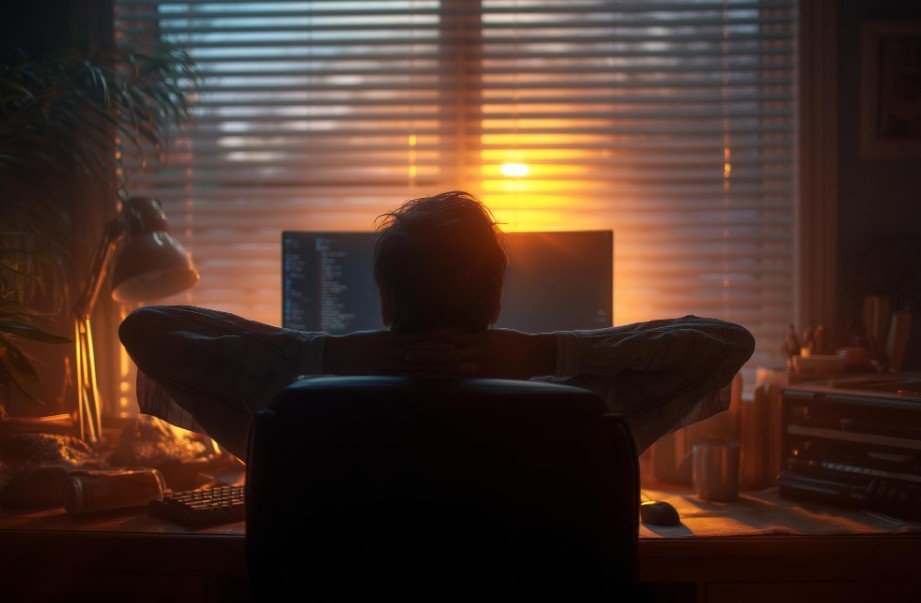
Leave Tomorrow’s First Step on Paper
Before you sign off, write down one specific action to start with tomorrow. “Open the budget draft and check the totals” gives your mind a clearer place to return than “deal with budget.” Close work tabs and silence work notifications when your role allows it.
If you work from home, shut the office door or put your laptop away. In a small apartment, clearing the desk and changing clothes can mark the same transition. If you commute, use the trip home as a boundary: listen to an album, notice your surroundings, or let part of the ride be quiet.
Keep Essential Calls Available
You do not need to make yourself unreachable. Put the phone on a charger away from the couch, silence distracting notifications, and allow calls from the people who may need you. This creates a little space between wanting relief and opening an app automatically.
Choose a Reset That Matches Your Energy

The most useful replacement is one you can begin without planning. Keep a few options ready so you are not searching for the perfect way to relax while exhausted.
If You Feel Restless, Move Gently
After a day at a desk, take a familiar walk around the block, stretch your shoulders, or stand outside for a few minutes. There is no need to turn recovery into a workout. A route that ends at your front door gives you a natural point to stop.
If You Feel Mentally Full, Reduce Input
Change clothes, take a shower, make a warm drink, or sit with one familiar song. These are reasonable choices on a night when even reading feels demanding. Let the activity be enough; you do not have to combine it with a podcast or another task.
If You Feel Disconnected, Reach Out
Sometimes the phone is standing in for company. Call a friend, talk with someone at home, or arrange a short walk together. A direct conversation meets a different need from checking what everyone else has posted.
If You Want Something to Show for Your Time, Make One Small Thing
Cook a simple dinner, water your plants, sketch for ten minutes, or work on one section of a puzzle. Choose something enjoyable with an endpoint.
Keeping the task small can also help you stay focused when motivation is inconsistent without turning your evening into another demanding work session.
Your evening does not need another performance goal.
Try a Fifteen-Minute Transition Tonight
Here is a realistic way to practice how to unwind after work without scrolling: spend two minutes writing tomorrow’s first task and closing work. Put your phone on its charger, with important calls still able to come through. Then choose one activity for the next ten to fifteen minutes.
Taking a short pause before starting your evening routine can build on the idea of how to take a mental break during work, especially when you need a simple reset rather than more stimulation.
On a busy night, the activity might be washing your face and sitting down with water. On another, it might be a walk or a chapter of a novel. When the time ends, notice how you feel. You can decide what to do next instead of letting the feed decide for you.
Make the alternative easy to find tomorrow. Leave the book by your chair, keep walking shoes near the door, or choose dinner before you finish work. If you still pick up your phone, start again at the next transition. One imperfect evening does not erase the practice.
Frequently Asked Questions
1. How do I start if I always scroll as soon as work ends?
Change the first action, not your entire evening. Write tomorrow’s first task, place your phone away from where you sit, and begin a prepared five-minute activity. Once that becomes familiar, extend it if you want to.
2. What if I am too tired to walk, cook, or read?
Rest is an option. Sit somewhere comfortable, drink water, listen to one song, or close your eyes for a few minutes. A screen-free break does not have to be productive to count.
3. Does how to unwind after work without scrolling mean giving up my phone?
No. It means creating a brief pause before opening a feed. You can remain available for calls and use your phone intentionally afterward.
Make the Evening Feel Like Yours
I have found that the hardest moment is the one immediately after work, when I want relief but have not decided what kind.
Creating that pause can also make it easier to detach from negative self-talk instead of carrying critical thoughts from the workday into the rest of your evening.
A written stopping point, a phone placed out of reach, and one easy activity give me room to make that decision. Some evenings, I take a walk. Others, I make tea and do very little. Both can be a genuine way to end the workday.