A bad habit rarely survives because you consciously decide, day after day, that it is the smartest choice. It survives because your brain has learned a shortcut: a familiar situation appears, you perform an automatic behavior, and something rewarding happens.
That is why learning how to replace bad habits with healthier ones is less about becoming more disciplined and more about redesigning that shortcut. Instead of fighting every urge, you can identify what triggers the behavior, understand what you are getting from it, and build a healthier response that works in the same moment.
The American Heart Association recommends this replacement approach because simply trying to stop an established behavior leaves an empty space that the old routine can quickly reclaim.
Your Bad Habit Is Usually Solving a Problem
Calling a behavior “bad” can hide an important question: What does it do for you?
Perhaps scrolling social media postpones an uncomfortable work task. Evening snacking creates pleasure after a stressful day. Staying up too late provides quiet personal time. Nail biting may briefly reduce tension.
That does not make the behavior healthy, but it explains why simply removing it can be difficult.
Harvard Health describes habits through three connected elements: a reminder, a routine, and a reward. Once the brain repeatedly associates those pieces, the behavior requires less deliberate decision-making.
For example:
Cue: You feel mentally drained at 3 p.m.
Routine: You buy a sugary snack.
Reward: You get stimulation, pleasure, and a break from work.
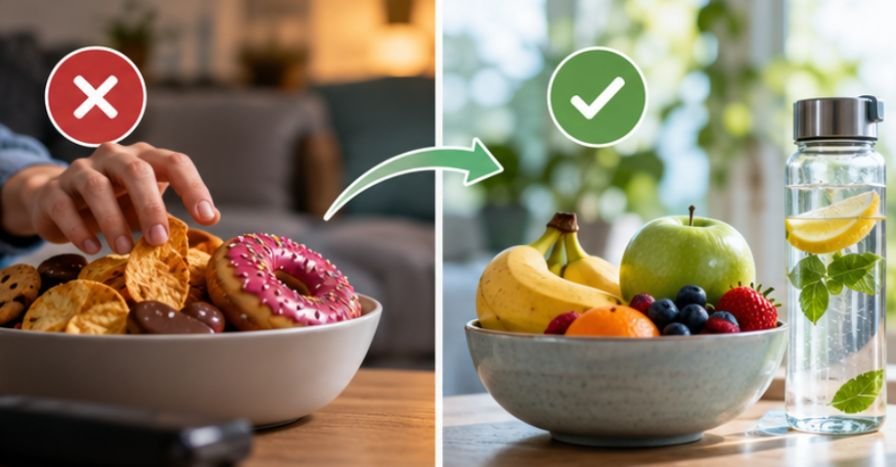
If you remove only the snack, the original need for a break or reward remains. A better strategy is finding another response capable of satisfying at least part of that need.
Find the Real Trigger Before Choosing the Replacement
Spend three to five days observing the habit rather than immediately trying to eliminate it. Each time it happens, quickly record five details: where you were, the time, what you were feeling, who was around, and what happened immediately beforehand. Harvard Health identifies these as common categories worth examining when searching for behavioral triggers. Patterns often appear surprisingly quickly.
Someone who assumes they “always snack too much” might discover that it happens primarily while watching television alone. Another person may believe they constantly check their phone but find the strongest trigger is actually uncertainty during difficult work assignments. Once the cue becomes specific, the replacement can become specific too.
Make the Old Habit Inconvenient
People often try to improve self-control while leaving their environment unchanged.
That creates unnecessary difficulty.
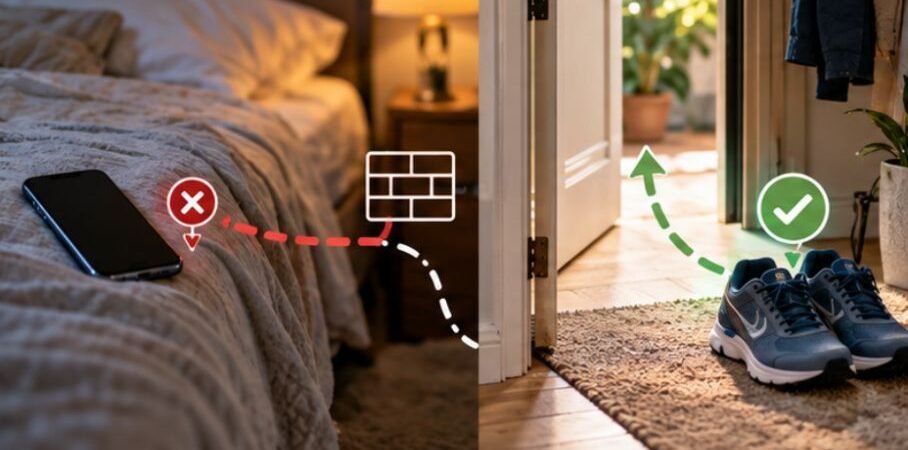
Suppose you want to stop spending an hour scrolling in bed. Keeping your phone next to your pillow means the cue, opportunity, and behavior remain inches apart.
Charging it across the room introduces friction. The same principle can work elsewhere. Avoid storing tempting snacks directly beside your desk. Disable nonessential notifications. Remove saved payment details from shopping sites. Put walking shoes beside the door.
Then reverse the strategy for the healthier habit. Make that behavior visible and easy. Stanford Medicine has highlighted “microsteps” such as charging a phone outside the bedroom or taking a brief pause between meetings—actions small enough to fit ordinary schedules.
Start Smaller Than Your Motivation Wants You To

Motivation often produces ambitious plans.
“I’ll exercise for an hour every morning.”
“I’ll never eat fast food again.”
“I’ll stop using social media after today.”
The problem appears when motivation drops but the plan stays difficult.
A better starting point is a replacement so small that performing it requires little negotiation. Walk for five minutes. Read two pages. Prepare one healthier snack. Put your phone away for ten minutes. The American Heart Association recommends beginning with achievable routines and gradually allowing repetition to strengthen the new pattern.
There is also no scientifically reliable “21-day rule.” Evidence summarized by the National Library of Medicine indicates that habit formation varies substantially; depending on the behavior and individual, automaticity may take weeks or months. Consistency matters more than hitting an arbitrary deadline.
A sustainable habit change also needs to fit the realities of your everyday life. Rather than building a routine around an ideal schedule, learning how to create habits that fit your lifestyle can help you choose behaviors that are realistic, adaptable, and easier to maintain when your energy, responsibilities, or circumstances change.
Keep the Reward Immediate
Healthy behaviors frequently offer delayed rewards.
Exercise may improve long-term cardiovascular health. Better sleep supports health over time. Saving money strengthens future financial stability.
Your brain, however, is also interested in what happens now.
Add an immediate positive signal: check the habit off a calendar, listen to a favorite podcast during your walk, notice your streak in a journal, or simply acknowledge completing the replacement.
That reward does not need to be large. It only needs to help your brain associate the new response with something positive.
Treat a Slip as Information, Not Proof the Plan Failed
One mistake can easily turn into an abandoned effort.
Instead, investigate the slip.
A lapse can also reveal that your routine depends too heavily on motivation to keep going. When enthusiasm fades, having practical strategies for how to build habits when motivation is low can make it easier to return to the healthier behavior instead of abandoning the change altogether.
Was the cue stronger than expected? Was the substitute inconvenient? Were you tired, hungry, stressed, or surrounded by people performing the old behavior?
The American Heart Association describes setbacks as a normal part of behavior change and recommends adjusting the cue, routine, or strategy rather than treating a lapse as permanent failure.
This same perspective can help outside habit change. Learning how to detach from negative self-talk can prevent a single setback from turning into “I never stick to anything.”
Know When Habit Tricks Are Not Enough
Not every repeated behavior should be handled as a simple productivity problem.
Smoking, problematic alcohol or drug use, eating disorders, compulsive gambling, self-harm, or behaviors connected with significant anxiety or depression may require professional treatment rather than a homemade habit swap.
For health behaviors with serious medical consequences, involve a physician or qualified mental health professional.
The CDC notes that tobacco use, poor nutrition, physical inactivity, and excessive alcohol use are major modifiable risk factors associated with chronic disease.
A Five-Minute Habit Replacement Checklist
Before attempting your next change, answer these questions:
- What exact behavior am I replacing?
- What usually happens immediately before it?
- What feeling or reward does the behavior provide?
- What healthier action could provide a similar benefit?
- How can I make the old response harder?
- How can I make the new response easier?
- What is my if-then plan?
- What will I do after a setback?
If you cannot answer the first four questions clearly, spend several days observing before trying to change anything.
Frequently Asked Questions
1. What is the best way to replace a bad habit?
Identify the cue and reward first, then introduce a healthier routine that can satisfy a similar need. Make the replacement easy enough to repeat consistently.
2. How long does it take to replace a bad habit?
There is no fixed timetable. Depending on the person and behavior, developing automaticity can take weeks or months rather than a predetermined number of days.
3. Can I change several bad habits at once?
You can, but changing one or two behaviors at a time often makes triggers, progress, and setbacks easier to identify and manage.
4. Why do I return to an old habit after stopping?
Familiar cues can reactivate well-practiced responses, particularly during stress or fatigue. Adjust the environment and immediately restart your replacement behavior rather than viewing one lapse as failure.
Build a Better Default
Learning how to replace bad habits with good ones starts with recognizing that the old behavior was probably doing something useful in the short term, even if its long-term consequences were unwanted.
So do not begin by declaring war on yourself. Study the cue. Identify the reward. Choose a small substitute. Write an if-then plan, reshape your surroundings, and repeat the new response whenever the familiar trigger appears.
Eventually, the most important change is not that you become better at resisting temptation. It is that the healthier action starts becoming the easier, more automatic choice.