A habit does not have to work every day to be well designed. In fact, the CDC advises choosing goals you can realistically accomplish about 90% of the time rather than building routines that collapse whenever work runs late, traffic gets bad, or family responsibilities intervene.
That is an important distinction when figuring out how to create habits that fit your lifestyle. The goal is not to squeeze yourself into somebody else’s 5 a.m. routine. It is to make useful behaviors compatible with the schedule, energy, responsibilities, and environment you already have. A sustainable habit should survive an ordinary Tuesday, not just your most motivated Saturday.
Stop Designing Habits for Your Ideal Life
Most failed routines begin with good intentions but unrealistic assumptions.
Someone who regularly gets home at 7 p.m. may decide to cook elaborate healthy dinners every night. A parent with unpredictable mornings may plan a strict 45-minute workout before work. Someone trying to read more might commit to 50 pages every evening despite usually being exhausted by bedtime.
The problem is not necessarily motivation. The routine may simply be mismatched with real life.
Research summarized by the National Institute on Aging notes that a person’s environment, workplace, home life, stress response, self-regulation, and social support can all influence whether behavior change lasts.
Before creating a habit, therefore, study your existing routine.
Ask yourself three questions:
What already happens reliably?
When do I normally have enough time or energy?
What usually causes my plans to fall apart?
Those answers are more useful than copying another person’s schedule.
A sustainable routine should account for more than the time available on your calendar; it should also reflect when you naturally have the capacity to follow through. Learning how to build a routine around your energy levels can help you design habits that correspond with your actual patterns of focus, fatigue, and availability rather than forcing every behavior into an idealized schedule.
Use the Minimum-Version Test
One of the easiest ways to test a new habit is to shrink it until it still works on a difficult day.
Stanford Lifestyle Medicine highlights behavior scientist BJ Fogg’s approach of making a behavior small enough that it remains manageable even when someone is busy, distracted, sick, or low on motivation.
Suppose you want to exercise regularly. Instead of declaring that every workout must last an hour, create several versions.
The same idea applies elsewhere. Reading can become two pages. Meditation can become one minute. Cleaning can become clearing one surface. Meal preparation can mean washing and cutting vegetables for tomorrow rather than preparing an entire week’s food. Consistency becomes easier when a habit has somewhere to shrink.
Attach New Behaviors to Things That Already Happen

Creating a completely new time slot requires remembering both when and what to do. Connecting a behavior to something already automatic removes one of those decisions.
The American Heart Association describes this strategy as habit stacking or habit chaining. For example, a person might connect several squats with brushing their teeth or another established routine.
A simple formula is:
After I [reliable existing action], I will [small new action].
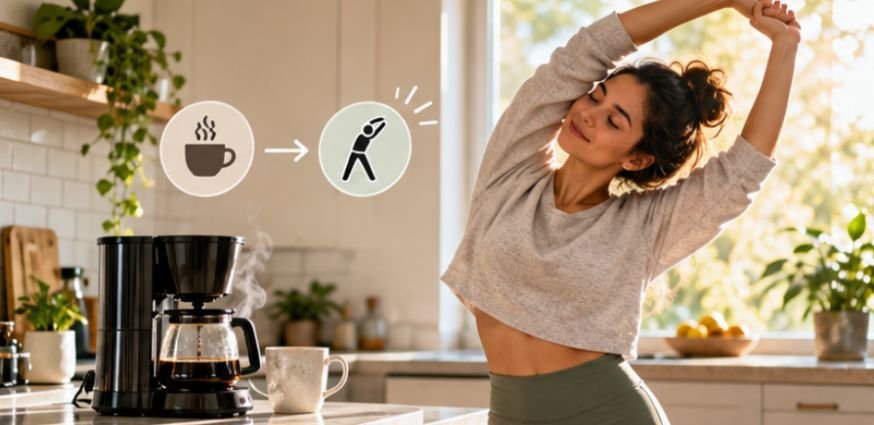
After making morning coffee, stretch for three minutes.
After closing your laptop for lunch, walk around the block.
After brushing your teeth at night, prepare tomorrow’s water bottle.
The best anchor is not necessarily something you do at an exact time. It should be something that happens reliably.
That distinction matters for people working rotating shifts, caring for children, traveling frequently, or living with otherwise unpredictable schedules. An event-based cue such as “after breakfast” can sometimes work better than “at 7:15 a.m.”
Redesign the Room Before Testing Your Willpower
The easiest behavior is often the behavior requiring the fewest steps.
NIH guidance on creating healthy habits specifically recommends changing your surroundings so healthier choices become easier while temptations become less convenient.
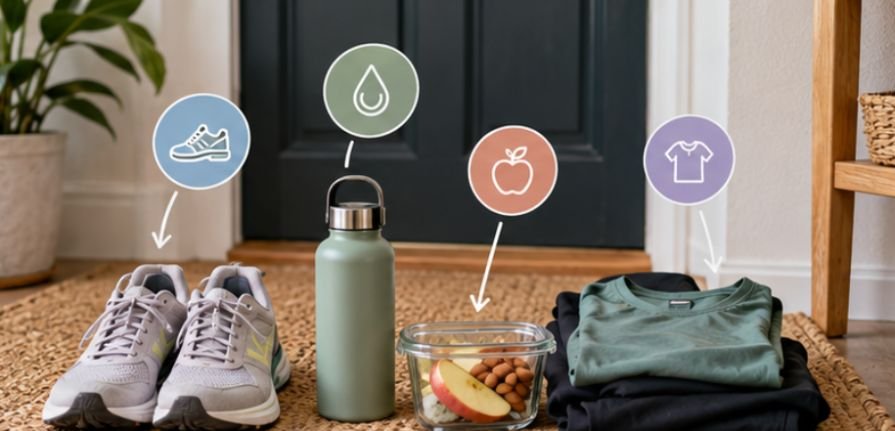
That might mean placing walking shoes beside the door rather than inside a closet, keeping fruit where it is visible, filling a water bottle before bed, or charging your phone outside the bedroom.
This principle works in reverse too.
If an unwanted behavior is automatic, add friction. Log out of distracting websites. Move snack foods away from your desk. Keep the television remote in another room when you intend to read.
Environment design is valuable because it reduces the number of moments in which you have to negotiate with yourself.
Build Habits Around Energy, Not Just Time
A free 30-minute period is not automatically a useful 30-minute period.
Imagine you have open time at 9 p.m. but consistently feel mentally drained then. Scheduling challenging study sessions at that hour may look efficient on paper while repeatedly failing in practice.
Match demanding habits to periods when you usually have more energy.
An adaptable routine should also leave room for genuine recovery rather than treating every period of low energy as a productivity problem. Learning how to rest without feeling guilty can help you recognize when stepping back is the more sustainable choice, allowing your habits to accommodate recovery instead of competing with it.
Use lower-energy windows for simpler behaviors: preparing clothes, organizing your desk, taking medication as directed, filling your water bottle, planning tomorrow’s priorities, or doing light stretching.
If motivation itself is creating problems, strategies for staying productive when feeling unmotivated can also help you distinguish between a badly designed routine and a temporary drop in drive.
Use the Lifestyle Fit Check Before Committing
Before trying any new routine for the next two weeks, score it against five questions.
1. Can I do a smaller version?
If missing 30 minutes means skipping the habit completely, the routine is fragile.
2. Does it have a dependable cue?
Identify exactly what will remind you to begin.
3. Is the environment ready?
Put the necessary equipment, food, book, clothing, or reminder where the behavior will happen.
4. What happens when the day changes?
Create a backup for late meetings, travel, illness, weather, childcare problems, or low-energy days.
5. Do I actually want this behavior?
Goals built entirely around outside pressure are harder to maintain. Make sure the action connects to something meaningful in your own life.
The NIDDK’s behavior-change guidance similarly recommends identifying roadblocks, creating specific plans, starting with manageable changes, and adjusting strategies when circumstances interfere.
If your proposed habit fails several questions, redesign it before trying harder.
Track Patterns, Not Perfect Streaks
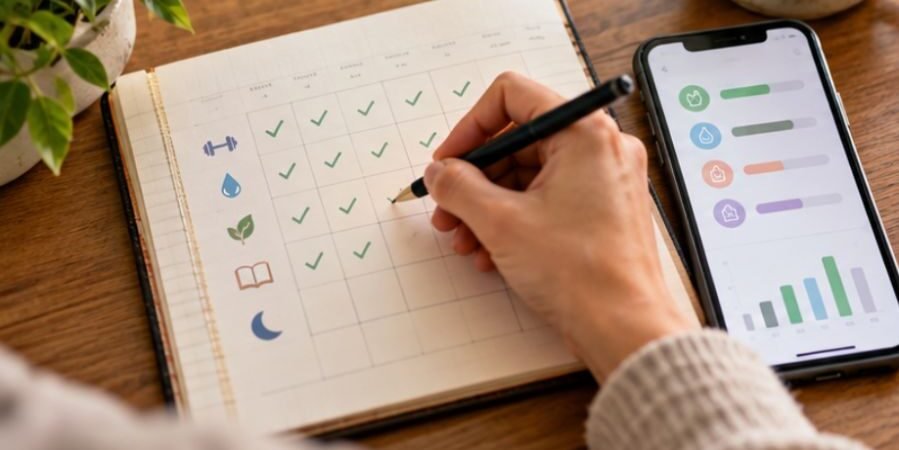
Habit trackers can be useful, but a long uninterrupted streak should not become the goal itself. Track enough information to discover why the routine works or fails.
Instead of recording only “done” or “not done,” occasionally note the time, location, energy level, and obstacle. You might discover that exercise happens reliably before dinner but almost never afterward, or that reading works during your commute but not before bed.
The CDC recommends tracking because it can reveal what is working and what needs adjustment.
If you repeatedly miss the same habit, treat that information as feedback.
Change the cue.
Shorten the behavior.
Move it to another time.
Alter the environment.
The habit should adapt before you conclude that you lack discipline.
Know When Routine Advice Is Not Enough
Not every difficulty can be fixed with a better habit loop. Chronic pain, disability, caregiving responsibilities, mental health conditions, irregular shift work, medical restrictions, limited access to safe spaces, and financial constraints may significantly change what is practical.
Health-related behaviors should also fit professional medical guidance when a person has an illness, injury, pregnancy, eating disorder history, or other condition that affects exercise, nutrition, sleep, or medication routines. Personalization does not mean ignoring limitations. It means designing around reality.
Frequently Asked Questions
1. How long does it take to build a habit?
There is no universal timeline. Habit development depends on the behavior, repetition, context, and individual. Focus on repeating a manageable action rather than expecting automatic behavior by a particular date.
2. What is the easiest way to learn how to create habits that fit your lifestyle?
Start with one tiny behavior, connect it to something you already do reliably, reduce environmental friction, and test the routine for two weeks before expanding it.
3. Should I restart after missing a habit?
Usually, simply resume at the next realistic opportunity. One missed repetition provides useful information; repeated misses may indicate that the cue, timing, difficulty, or environment needs adjustment.
4. Is it better to build several habits at once?
Usually not. The CDC recommends starting with one new habit and adding others after you have had time to practice the first behavior.
Make the Habit Fit the Life You Actually Have
The strongest routine is rarely the most impressive one. It is the one that keeps finding a place in your life when meetings move, energy drops, vacations happen, and ordinary responsibilities compete for attention.
Learning how to create habits that fit your lifestyle means replacing rigid plans with adaptable systems: choose a small starting action, connect it to an existing cue, prepare the environment, create a backup version, and revise what consistently fails.
Before adding another ambitious goal tomorrow, examine one routine you already want to build. Make it easier, give it a reliable anchor, and design a version you could still complete on a difficult day. That is where sustainable habits begin.