
The latest national numbers contain an encouraging shift: in 2025, 33% of U.S. high school students reported persistent sadness or hopelessness, down from 40% in 2023. Serious consideration of suicide also declined from 20% to 14%. Yet one-third of students experiencing prolonged sadness is still far too many.
That is why effective mental health activities for teenagers should do more than temporarily distract from stress. The strongest everyday practices give teens ways to move their bodies, regulate overwhelming emotions, express what they cannot easily say, connect with people they trust, and recognize when ordinary coping is no longer enough.
Why Everyday Mental Health Activities Matter

Mental health is not created by one meditation session, soccer practice, journal entry, or family dinner. Protective habits become useful because they are repeated.
The CDC’s 2025 Youth Risk Behavior Survey emphasizes the importance of strong relationships with adults and peers at home, at school, and in the community. Schools are also encouraged to build emotional regulation, coping, problem-solving, and relationship skills.
The practical lesson is simple: teenagers benefit from having several ways to respond to stress rather than relying on a single coping mechanism.
That same principle applies to the environment around a teenager. Simple habits to feel more organized can reduce everyday mental clutter by creating predictable places for belongings, school tasks, routines, and responsibilities, making it easier to focus on emotional wellbeing rather than constantly reacting to small sources of disorder.
Start With Movement, Not a Lecture
A teenager who comes home visibly frustrated may not be ready for an immediate conversation about feelings. Sometimes movement is a more accessible starting point.
Walking, swimming, dancing, cycling, lifting weights, shooting basketballs, practicing yoga, or playing a team sport gives the body somewhere to put restless energy. The U.S. Physical Activity Guidelines recommend that young people ages 6–17 accumulate at least 60 minutes of moderate-to-vigorous activity daily.
That does not mean an anxious teenager needs an intense workout. Ten minutes walking the dog, stretching before homework, or playing music and moving around the bedroom can be more realistic on difficult days.
Outdoor movement adds another useful element. A walk through a neighborhood park or nearby trail temporarily separates a teenager from school demands, screens, notifications, and the environment where stress may have accumulated.
Give Difficult Emotions Somewhere to Go
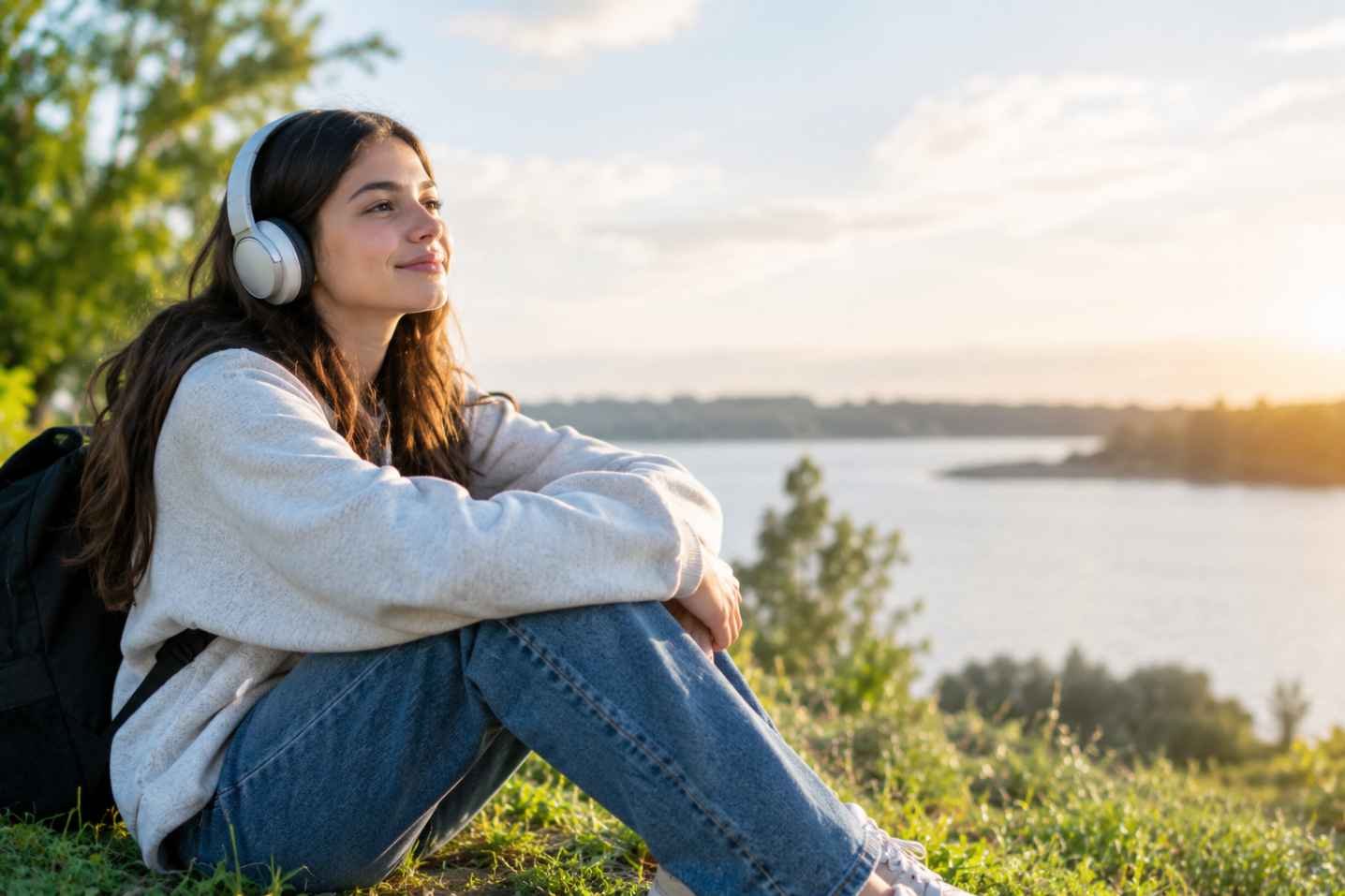
Talking directly about emotions works for some teenagers. Others communicate much more easily when attention is focused on an activity.
Try Low-Pressure Journaling
Instead of assigning a teenager a formal diary, offer prompts requiring only a few sentences:
“What drained my energy today?”
“What made today easier?”
“What am I worrying about that I cannot control?”
“What would I tell a friend experiencing this?”
The American Psychological Association notes that expressive writing can support well-being and that writing about positive experiences, including things a person appreciates or feels proud of, has been associated with reduced psychological distress.
Use Art Without Turning It Into Therapy Homework
Drawing, painting, photography, collage-making, clay, graphic design, and digital mood boards can help teenagers externalize feelings without forcing them to explain everything verbally.
One useful exercise is an identity collage containing images representing “what people see,” “what matters to me,” and “what I want more of.” The finished piece matters less than the reflection it creates.
Music can work similarly. A teenager might create separate playlists for calming down, concentrating, releasing frustration, or improving energy. The goal is active mood awareness rather than simply putting headphones on whenever uncomfortable feelings appear.
Teach a Fast Grounding Routine
Stress can become harder to manage when attention gets trapped in imagined future problems or repetitive negative thoughts.
A simple 3-3-3 grounding exercise can interrupt that loop:
| Step | What the Teen Does | Purpose |
| 1 | Identify three things they can see | Redirect attention outward |
| 2 | Notice three sounds | Engage the senses |
| 3 | Move three parts of the body | Reconnect with physical surroundings |
This is not a treatment for an anxiety disorder. It is a short coping exercise that may help someone regain enough calm to decide what to do next.
Mindful breathing and brief body scans can serve a similar purpose. Stanford Medicine, for example, provides short teen-focused mindfulness recordings, including mindful breathing and body-scan practices lasting only a few minutes.
For teenagers who dislike meditation, stretching slowly while noticing breathing and muscle tension can be a less intimidating alternative.
Protect Sleep Before Adding More Activities
Sometimes the most useful mental health intervention in a teenager’s routine is not adding something new—it is protecting recovery time.
CDC guidance says adolescents generally need about eight to ten hours of sleep per night. Insufficient sleep can interfere with concentration and mental health.
A realistic evening routine might mean charging the phone outside the bedroom, reducing notifications near bedtime, dimming lights, showering, stretching, or reading something unrelated to school.
These simple practices can also form part of broader daily habits to support emotional wellbeing, especially when they are repeated consistently rather than treated as a quick fix for stressful days. Building a predictable foundation around sleep, movement, connection, and recovery can give teenagers more stability when everyday pressures become difficult to manage.
Sleep problems should not automatically be blamed on screen use, however. Anxiety, depression, medication, chronic health conditions, demanding schedules, work responsibilities, and sleep disorders can also disrupt rest.
Make Social Connection an Activity
Teen mental health advice often focuses heavily on individual coping, even though adolescents develop inside families, schools, friendships, teams, and communities.
Consider screen-free family meals, cooking together, driving somewhere without headphones, volunteering, joining a school club, playing recreational sports, taking an art class, or spending time with a trusted relative.
The conversation does not always need to be about mental health. Consistent, ordinary contact can make harder conversations easier later.
For families thinking more broadly about isolation and online life, these ways to feel more connected in an increasingly digital world can also help create healthier opportunities for offline connection.
Community recreation centers, libraries, youth groups, arts programs, faith communities, mentoring organizations, and school clubs can be especially valuable for teenagers whose social network has become very small.
Don’t Treat Social Media as Automatically Good or Bad
“Delete social media” sounds simple, but the evidence is more complicated.
A 2026 American Academy of Pediatrics review describes both potential harms and benefits. Negative experiences may include problematic use and exposure to harmful content, while online communities can also provide social support, learning opportunities, and identity exploration.
A better experiment is a seven-day screen audit. Teens can notice which platforms leave them energized, connected, neutral, anxious, excluded, or unable to sleep.
Then change the pattern rather than automatically banning the device: mute stressful accounts, remove nighttime notifications, establish phone-free periods, or replace 30 minutes of scrolling with something the teenager actually enjoys.
Use the “Move, Make, Notice, Connect” Test
Parents, teachers, counselors, and teenagers can use four questions when choosing effective mental health activities for teenagers:
Does it help me move physical tension?
Does it let me make or express something?
Does it help me notice thoughts, emotions, or surroundings without immediately reacting?
Does it help me connect with someone safe?
An activity does not need to accomplish all four. A strong weekly routine simply includes opportunities from several categories.
Most importantly, let teenagers have some control over what they choose. A coping strategy that feels imposed can quickly become another obligation.
Know When Activities Are Not Enough
Wellness activities cannot replace professional mental-health assessment or treatment.
The National Institute of Mental Health advises seeking professional help when emotional or behavioral changes last for weeks, cause significant distress, or interfere with life at school, home, or with friends. Warning signs may include withdrawing from previously enjoyed activities, major sleep changes, declining functioning, substance use, self-harm, suicidal thoughts, or dangerous behaviour.
If a teenager talks about suicide or self-harm, treat the situation as a safety concern rather than relying on journaling, exercise, meditation, or other self-care activities.
Frequently Asked Questions
1. What are the most effective mental health activities for teenagers?
Movement, creative expression, mindfulness, sufficient sleep, supportive relationships, and enjoyable structured activities can all help. The best combination depends on the teenager’s preferences, needs, and current level of distress.
2. How often should teenagers practice mental health activities?
Short, regular practices are usually more realistic than occasional intensive sessions. A teenager might walk daily, journal several times weekly, protect sleep every night, and maintain regular contact with supportive people.
3. Can exercise improve a teenager’s mental health?
Physical activity supports mental as well as physical health. It can also provide routine, social interaction, confidence, and a constructive outlet for stress, especially when teens choose activities they genuinely enjoy.
4. When should a parent seek professional help?
Seek guidance when symptoms persist for weeks, interfere with daily functioning, become increasingly severe, or involve self-harm, suicidal thoughts, substance misuse, dangerous behavior, or other significant changes.
Small Activities Can Create a Larger Safety Net
The encouraging movement in recent U.S. youth mental-health statistics shows that negative trends are not irreversible. But better national numbers do not make an individual teenager’s struggle less important.
The most useful goal is not to build a perfect “mental wellness routine.” It is to give teenagers several dependable places to turn: movement when tension builds, creativity when words fail, grounding when thoughts race, sleep when the body is depleted, and people who remain available when life becomes difficult.
Those small options, repeated consistently, can become something much bigger—a personal network of coping skills, connection, and support.