
A desk job can feel physically easy while quietly asking the body to do something it handles poorly: remain almost motionless for hours. Current CDC guidance tells adults to “move more, sit less” while working toward at least 150 minutes of moderate-intensity activity and two days of muscle-strengthening exercise each week.
The most useful healthy habits for office workers are not elaborate wellness challenges. They are small interruptions to sitting, smarter workstation mechanics, eye breaks, sensible food and hydration choices, and routines that survive a deadline-heavy Tuesday.
Why Sitting Still for Hours Is the Real Workplace Problem
A workout after work is valuable, but it does not make spending an entire workday almost completely stationary ideal.
The American Heart Association’s workplace activity guidance encourages desk workers to take small opportunities to move throughout the day, such as standing during calls, stretching during breaks, walking to another area of the office, and getting up regularly rather than remaining seated continuously.
Instead of depending entirely on reminders, create movement triggers tied to normal work events. Stand after completing a meeting. Refill your water after submitting a report. Take a short walk after lunch.
A timer every 30 to 60 minutes can help, but perfection is unnecessary. The bigger goal is breaking up long, uninterrupted blocks of sitting.
Make the Workstation Fit Your Body
Ergonomics does not mean buying the most expensive office chair. It means arranging the workspace so the body spends less time in awkward positions.
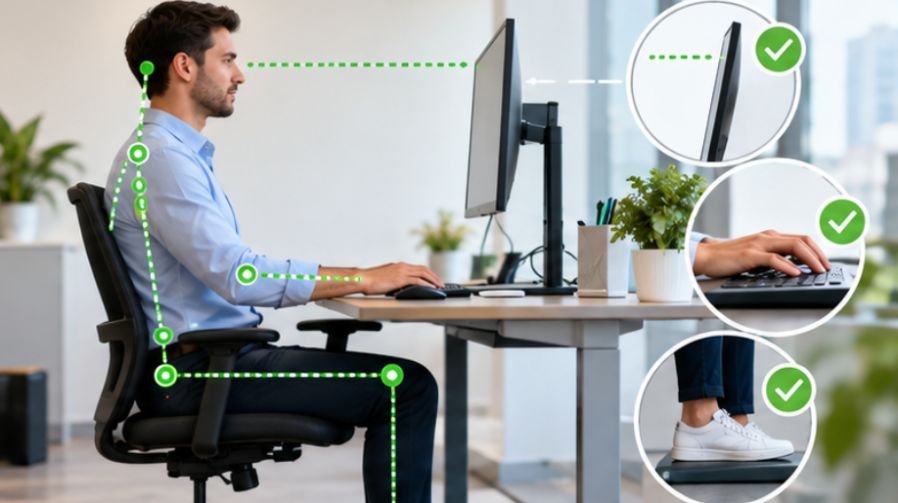
According to OSHA’s computer workstation guidance, a neutral working position generally includes relaxed shoulders, elbows close to the body, wrists aligned with the forearms, a supported lower back, and feet supported by the floor or a footrest.
OSHA also recommends positioning the monitor so its top is at or slightly below eye level. A screen that is too low can encourage repeated forward neck bending.
Cornell University’s workstation ergonomics guidance emphasizes keeping frequently used objects close enough to reach without excessive leaning or stretching.
Try This 60-Second Desk Test
Before settling into your first task, check five things: Are both feet supported? Are your shoulders relaxed? Are your wrists reasonably straight? Is your main screen directly in front of you? Can you reach your mouse without stretching your shoulder?
If one answer is no, fix that issue first rather than attempting to create a perfectly ergonomic office overnight.
| Workday signal | Possible cause | First adjustment |
| Neck leaning forward | Monitor too low or distant | Raise or reposition the screen |
| Bent or sore wrists | Keyboard or mouse position | Bring devices closer and straighten wrists |
| Feet dangling | Chair too high | Add a stable footrest |
| Shoulder reaching forward | Mouse too distant | Move mouse beside the keyboard |
| Frequent stiffness | Too little position change | Add short movement breaks |
Give Your Eyes a Different Distance
Eight hours of computer work can produce tired, dry, or uncomfortable eyes even when nothing is seriously wrong with them.
The American Academy of Ophthalmology recommends the 20-20-20 approach: approximately every 20 minutes, look at something at least 20 feet away for at least 20 seconds. It also suggests keeping the screen about an arm’s length away and positioned so you look slightly downward.
Blink deliberately during long periods of concentration, particularly if your eyes become dry. Reducing glare and adjusting screen contrast may also help.
Persistent blurred vision, pain, headaches, or severe dryness deserves professional attention rather than endless experimentation with monitor settings.
Build Movement Into Work, Not Only Around It
The current CDC physical activity recommendations for adults call for at least 150 minutes of moderate-intensity aerobic activity per week, along with muscle-strengthening exercise on two or more days. The activity does not need to happen in one continuous session.
That flexibility matters for busy workers.
A brisk 15-minute walk before work, another during lunch, and additional activity later can contribute toward the weekly target. Walking meetings, stairs, and parking farther away can add movement without creating another major appointment.
However, these small activities should complement purposeful exercise rather than become an excuse to avoid it entirely. Desk work places little demand on many large muscle groups, making regular strength training useful as well.
Make Food and Water the Easy Choices
A reusable water bottle sitting beside the keyboard is more useful than a complicated hydration plan that you forget by 10 a.m.
Drink regularly according to thirst and individual needs rather than forcing enormous quantities. Fluid requirements vary with activity, weather, diet, pregnancy, medications, and health conditions.
Lunch deserves similar practicality. Meals containing protein, produce, fiber-rich carbohydrates, and healthy fats tend to be more useful for a long workday than regularly relying on oversized restaurant meals or highly processed snacks.
Keep convenient choices nearby. Fruit, unsalted nuts, yogurt, vegetables, or hummus require little preparation and make impulsive vending-machine decisions less likely.
The goal is not dietary perfection. It is arranging your environment so the easier decision is usually a reasonable one.
Use a Three-Habit System Instead of Changing Everything
Trying to transform sleep, exercise, nutrition, posture, productivity, and hydration simultaneously often turns workplace wellness into another stressful project.
Choose three changes for the next two weeks:
One movement habit, such as walking for five minutes after lunch.
One workstation improvement, such as raising your monitor.
One nutrition or hydration habit, such as bringing a filled water bottle to your desk.
Attach each behavior to something that already happens. For example, stretch after logging in or refill your water after your morning meeting.
When circumstances are unpredictable, maintaining those habits may require more than a fixed routine. Learning how to motivate yourself during uncertain times can help you remain engaged with manageable behaviors even when workload, schedules, or daily circumstances change unexpectedly.
This approach works especially well alongside strategies for building motivation through daily routines because predictable cues reduce the need to repeatedly make the same decision.
If a habit keeps failing, make it smaller before abandoning it.
Healthy Office Advice Has Limits

Standing all day is not automatically better than sitting all day. Holding almost any position continuously can become uncomfortable. Alternating between sitting, standing, and moving is generally more practical.
Individual needs also matter. Workers with chronic pain, disabilities, cardiovascular conditions, pregnancy-related needs, arthritis, or recent injuries may need modified recommendations.
CDC guidance notes that people with chronic health conditions or disabilities may benefit from discussing appropriate forms and amounts of activity with a healthcare professional.
Do not assume recurring numbness, weakness, significant pain, chest symptoms, severe headaches, or ongoing vision problems are simply consequences of office work. Persistent symptoms deserve proper medical assessment.
Workday habits also become easier to sustain when they connect with a consistent evening routine. Simple practices such as reducing stimulation, preparing for the next day, and creating a calmer transition into sleep can reinforce healthier boundaries between work and rest. Developing a few healthy habits to start before bed can therefore complement the movement, ergonomic, and nutrition habits established during the working day.
Frequently Asked Questions
1. How often should office workers get up from their desks?
There is no universal interval. Breaking up prolonged sitting every 30–60 minutes with brief standing, stretching, or walking is a practical routine for many desk workers.
2. What is the healthiest posture for computer work?
Keep your back supported, shoulders relaxed, feet supported, elbows near your body, and wrists aligned with your forearms. Change positions periodically rather than attempting to hold one posture indefinitely.
3. Do I need a standing desk to stay healthy at work?
No. A standing desk can help vary your position, but frequent movement, good workstation setup, regular exercise, and avoiding prolonged static postures matter more.
4. What are the easiest healthy habits for office workers to start?
Begin by interrupting prolonged sitting, correcting one obvious workstation problem, and keeping water or a nutritious snack within easy reach. Add other habits gradually.
A Healthier Workday Starts With Its Rhythm
The hidden challenge of office work is not physical exertion. It is how easily hours can pass while the body barely moves.
The most sustainable healthy habits for office workers change that rhythm without making work complicated. Stand before stiffness forces you to. Arrange your desk so your body does not fight the furniture. Give your eyes regular distance, make water and nutritious food convenient, and build purposeful exercise into the week.
You do not need a perfect wellness routine. A healthier office day usually begins with one simple action repeated often enough to become ordinary.