
You do not need a perfectly organized morning, a 6 a.m. workout, or meal-prep Sundays to become healthier. In fact, a rigid plan can be the wrong tool when your work hours, sleep schedule, caregiving duties, classes, or energy levels change from day to day.
For people living with unpredictable schedules, the most useful healthy habits for people with no routine are small actions connected to events that already happen. You wake up. You eat something. You wait for coffee. You stand up. You feel stressed. You eventually go to bed. Those moments can become health cues without requiring a calendar.
Stop Building Habits Around the Clock
Traditional habit advice often sounds like this: exercise at 7 a.m., eat lunch at noon, meditate at 6 p.m., and sleep at 10:30.
That works beautifully—until your shift changes, your child wakes early, a meeting runs late, or you simply have an unusually chaotic day.
A better approach is event-based rather than time-based.
Instead of saying, “I will stretch at 8 a.m.,” try, “I will stretch after I get out of bed.”
Instead of scheduling a hydration alarm, drink water before your first coffee or other caffeinated drink.
The cue survives even when the clock changes.
This is essentially habit stacking: connecting a new action to something already occurring in your life. For people without predictable schedules, the existing activity becomes more reliable than a specific hour.
Use the Minimum-Viable Habit Test
Before adopting any new habit, ask three questions:
- Can I do this in five minutes or less on a difficult day?
- Does it attach naturally to something I already do?
- Would doing a smaller version still be worthwhile?
If the answer is yes to all three, you probably have a sustainable starting point.
A 10-minute walk, for example, may appear insignificant compared with an hour-long gym session. But the CDC emphasizes that some physical activity is better than none and that activity can be broken into smaller chunks throughout the week. U.S. adults should ultimately work toward at least 150 minutes of moderate-intensity activity weekly, plus muscle-strengthening activity on two days.
The goal is not to pretend 10 minutes equals the full recommendation. It is to create a repeatable doorway into more movement.
Six Flexible Anchors That Work on Messy Days

Make Your First Meal Nutritionally Useful
People with irregular schedules may not eat a conventional breakfast, lunch, and dinner. Rather than worrying about what a meal is called, improve whichever meal reliably happens first.
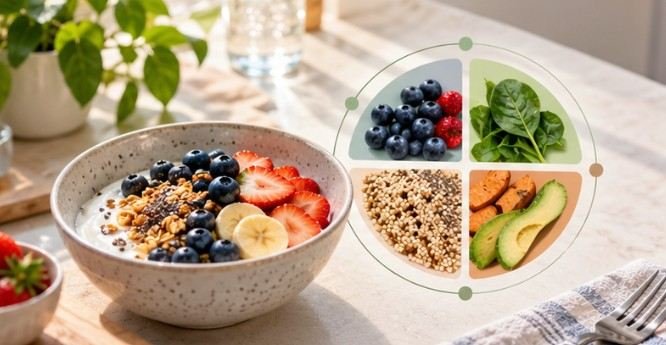
Add berries to yogurt, a banana beside toast, frozen vegetables to eggs, spinach to a sandwich, or vegetables to takeout.
USDA MyPlate healthy eating resource guidance encourages Americans to make about half their plate fruits and vegetables and notes that fresh, frozen, canned, and dried options can all contribute to a healthier eating pattern.
This “produce anchor” is easier to remember than planning an entirely different diet overnight.
Turn Standing Up Into a Movement Cue
Exercise does not have to begin with sneakers and a fitness app.
Whenever you stand to use the restroom, refill a drink, answer the door, or switch tasks, use the transition for a brief stretch, several squats, calf raises, or a short walk.
The CDC reports that even a single session of moderate-to-vigorous physical activity can produce immediate benefits, including reduced feelings of anxiety and improved sleep quality.
Think of these as movement snacks rather than workouts.
Give Stress a Tiny Exit Route
Stress habits often fail because people imagine meditation must require 20 quiet minutes, special music, or complete concentration. It does not.
Try three slow breaths when you notice your shoulders tightening, when a webpage loads, after parking your car, or while waiting at a red light.
The National Center for Complementary and Integrative Health reports that slow diaphragmatic breathing has shown potential for reducing stress and may modestly reduce blood pressure and cortisol levels. Mindfulness practices may also help some people manage stress, anxiety, and sleep difficulties.
Three breaths will not eliminate chronic stress. They simply create a repeatable interruption between tension and your next reaction.
That distinction matters. Healthy thinking is not about pretending everything is fine. Understanding the difference between healthy optimism and toxic positivity can help you build habits that acknowledge difficult days instead of denying them.
Use the Five-Minute Environment Reset
Physical surroundings influence how difficult healthy decisions feel.
When clutter becomes distracting, do not decide to “clean the house.” Set a five-minute timer and clear one visible surface: your desk, nightstand, kitchen counter, or couch.
This method has two advantages. First, the task has a defined ending. Second, restoring one functional space can make the next useful behavior easier—cooking, sleeping, working, or simply finding what you need. Your environment does not need to look perfect. It needs to stop fighting you.
Protect Sleep With a Closing Cue
Sleep is one area where regular timing does matter biologically. The National Heart, Lung, and Blood Institute recommends keeping sleep and wake times as consistent as possible, limiting bright light before bed, staying active during the day, and keeping the bedroom quiet, cool, and dark.
But people working rotating shifts, caring for infants, traveling frequently, or managing unpredictable responsibilities may not control their bedtime.
In that case, protect the sequence even when the hour changes.
Your closing sequence might be: brush teeth, dim lights, stretch for two minutes, charge your phone away from the pillow, then sleep.
The time can move. The cue stays recognizable.
Do Not Ignore Social Health

A healthy life is not only food, exercise, and sleep.
The U.S. Surgeon General has highlighted social connection resources as an important contributor to health and well-being, while social isolation is associated with greater health risks.
Your social habit can be remarkably small: send one friend a message while waiting for food, call a relative during a walk, or respond to the message you have been postponing.
Connection does not need a recurring Thursday dinner to count.
Frequently Asked Questions
1. What are the easiest healthy habits for people with no routine?
Start with water after waking, produce with your first meal, short walking breaks, brief stretches, three slow breaths during stress, and a simple pre-sleep wind-down.
2. Can you become healthy without following a daily schedule?
Yes. Health behaviors can be attached to recurring events rather than fixed times, although some consistency—especially around sleep—can still be beneficial.
3. How many new habits should I start at once?
One to three is usually easier to manage than changing everything simultaneously. Make each behavior small enough to continue on unusually busy days.
4. Does a five-minute habit really make a difference?
A small habit does not replace full health recommendations, but it can reduce the barrier to starting and create a behavior that gradually becomes easier to repeat or expand.
Build Around What Already Happens
The surprising lesson is that a lack of routine does not mean you have nothing to build on. Your days already contain dozens of dependable events: waking, eating, drinking coffee, standing, commuting, waiting, feeling stressed, and eventually going to sleep.
Use those moments. The strongest healthy habits for people with no routine are not the ones that look impressive on a planner. They are the ones that remain possible when Wednesday looks nothing like Tuesday.
Start with one anchor today. Make it almost too easy. Once it survives the unpredictable days, you have something far more valuable than a perfect schedule: a habit that travels with you.