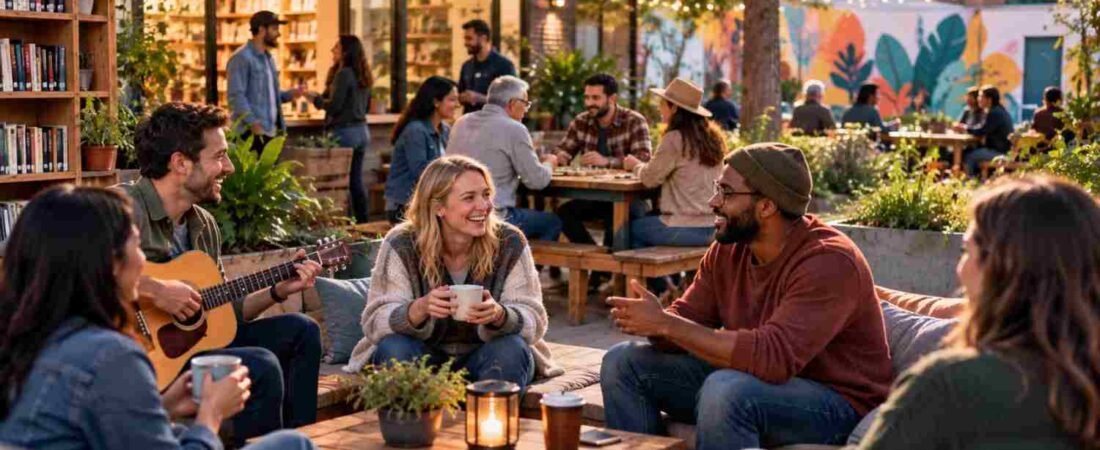
I started noticing how different a neighborhood feels when there is nowhere to linger. People can live on the same block for years and still barely know one another. A reliable place to sit, chat, or join a small activity can change that rhythm without requiring a major project.
I have found that the best gathering spots rarely begin with a grand plan. They often start with a library table, a park bench, a coffee shop corner, or a shared room where someone decides to show up regularly. The goal is simple: create an easy reason for people to cross paths often enough for familiarity to grow.
What Makes a Third Place Work?
A third place sits outside home and work and gives people a comfortable setting for informal social interaction. It can be public, nonprofit, commercial, or somewhere in between. People should be able to enter without needing an invitation, membership, or expensive purchase.
A useful third place also feels neutral. Someone should be able to stay, leave when they want, and return without pressure. That freedom makes casual conversation possible. Repeated encounters can turn strangers into familiar faces and familiar faces into neighbors.
Start With a Place Your Community Already Has
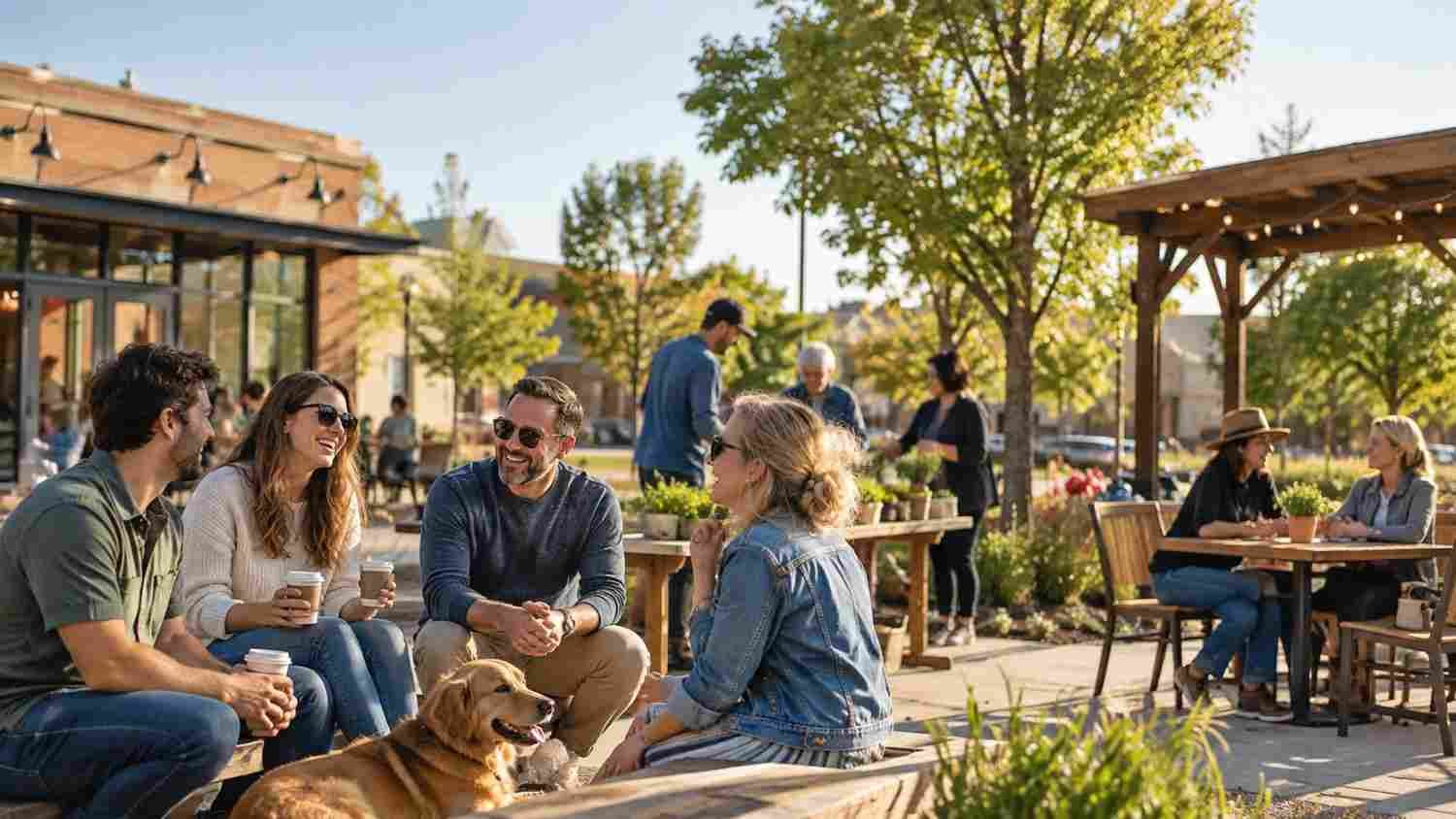
Creating a new building is rarely necessary. Look around for existing spaces that could support more social use. A public library, neighborhood park, community garden, recreation center, bookstore, independent cafe, apartment common room, or welcoming storefront may have untapped potential.
Accessibility should shape the decision from the beginning. A location near sidewalks, bike routes, public transportation, or common destinations is easier for more people to use. Think about seating, restrooms, shade, lighting, parking, and mobility access.
Cost matters, too. If participation requires buying something every time, some neighbors will be left out. A free or low-cost setting lowers the barrier to regular attendance.
Make the Space Comfortable Enough to Stay
People are more likely to linger when the environment signals belonging. Good lighting, clean surroundings, comfortable seating, plants, artwork, and clear signs can make an ordinary room feel warmer.
Flexible furniture helps as well. Movable chairs and small tables can support solo reading one afternoon and group conversation the next. The goal is not perfect design. It gives people enough comfort and choice to use the space naturally.
Give People a Reason to Return
A promising location can remain empty without rhythm. Pick a recurring time and keep it predictable. Tuesday evening coffee, Saturday morning walks, a monthly repair meetup, or a weekly book discussion gives people a simple reason to return.
Low-stakes activities work because they remove pressure to socialize immediately. A craft table gives hands something to do. A walking group creates conversation side by side. A shared breakfast creates a pause for conversation.
At first, someone may need to host. Welcome newcomers, explain what is happening, and introduce people when appropriate. Once regulars recognize one another, that responsibility can spread naturally.
Let Small Interactions Build
A third place does not need constant entertainment. Too much programming can make it feel like an event rather than a community space. Leave room for unplanned conversations and quiet participation.
This is where creating meaningful connections beyond social media becomes practical rather than abstract. Online networks can help people discover a gathering, but repeated face-to-face contact gives relationships a different texture. Seeing the same person at the same park each Saturday makes a simple greeting easier the following week.
The same principle applies to newcomers. Do not expect instant friendship. A person may first learn someone’s name, exchange a few comments, then sit together during an activity. Familiarity develops through small moments.
Make Belonging Easier for More People
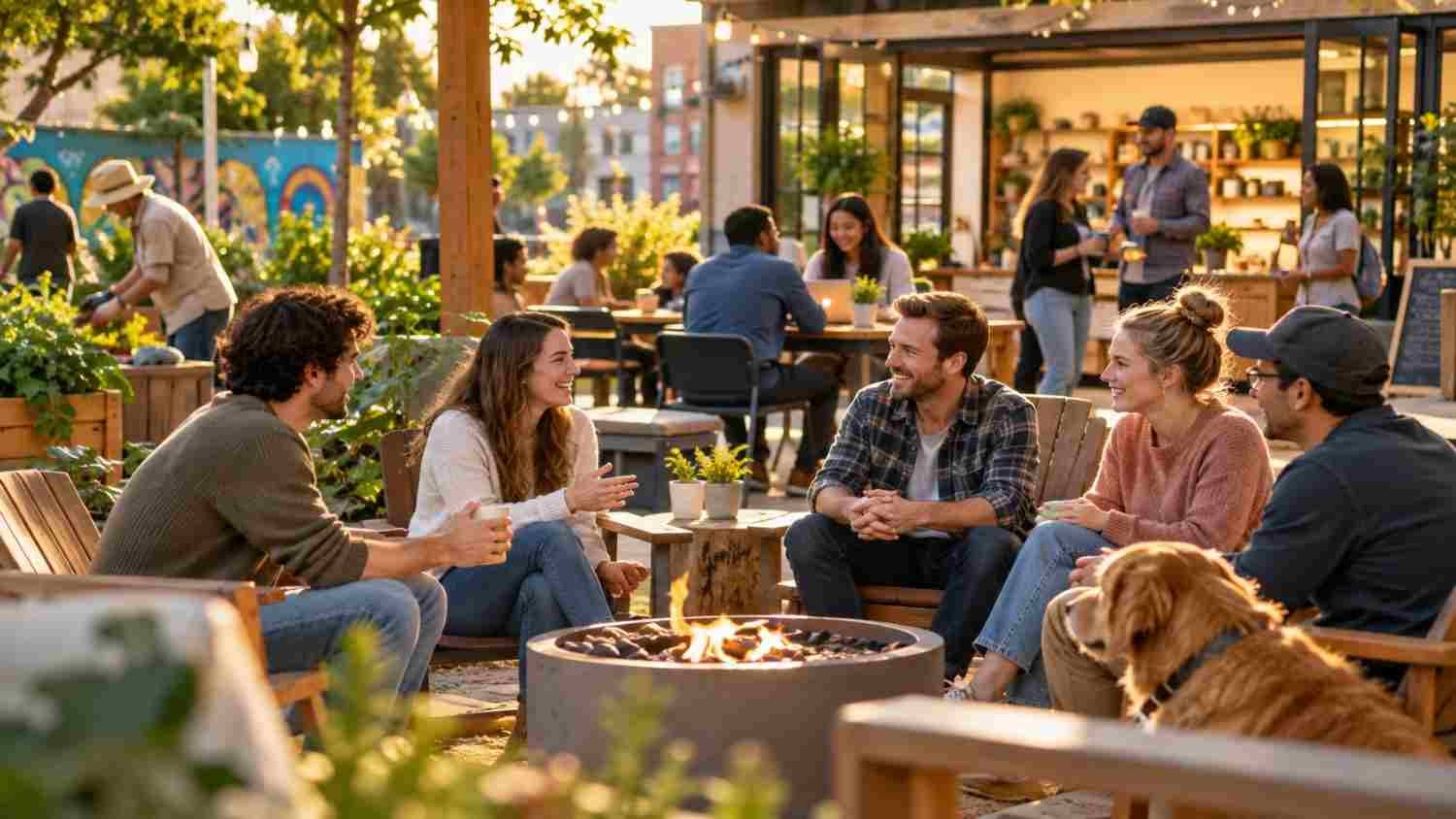
A strong community space should not cater only to outgoing regulars. Consider parents, older adults, people with disabilities, newcomers, shift workers, and residents uncomfortable entering an established group.
Use plain invitations and explain what newcomers can expect. Avoid assuming everyone knows the social rules. Keep some activities free, offer different times when possible, and make it acceptable to participate quietly.
Small choices can also help people move beyond polite recognition. If someone has attended several times, introduce them to another regular with a shared interest. That gentle bridge can make how to turn acquaintances into genuine friendships feel more achievable than telling people to “get involved.”
Keep the Community Sustainable
Momentum fades quickly when something depends entirely on one person’s energy. Once attendance becomes consistent, invite regulars to share small responsibilities. One person can bring supplies, another can welcome newcomers, and someone else can coordinate meetups.
Pay attention to what people actually use. If an activity draws little interest, change it. If people stay afterward to talk, protect that time. A third place should evolve with its community rather than follow a rigid blueprint.
FAQs: How to Create a Third Place in Your Community and Bring People Together
1. What counts as a third place?
A third place is a regular social setting outside home and work where people interact informally. Libraries, parks, cafes, community centers, and shared neighborhood spaces can all serve this role.
2. Does creating a third place require a large budget?
No. Starting with an existing space, donated supplies, simple seating, and recurring free activities can be enough. Consistency usually matters more than expensive design.
3. How do you get people to attend?
Choose a predictable schedule and offer an easy, low-pressure reason to come. Personal invitations can also help early on, especially when people do not know what to expect.
4. How long does it take to build a community?
There is no fixed timeline. Trust and familiarity usually develop through repeated encounters. Give people enough consistency to recognize faces and freedom for relationships to form.
Why Community Grows Through Repeated Moments
A successful third place is rarely defined by its furniture, branding, or size. Its value comes from what happens when people keep returning. A person who once felt anonymous may eventually have someone save them a seat. A newcomer may become a familiar face, then a helpful neighbor, then a friend. Those changes can happen quietly.
Strong community spaces leave room for ordinary connection. Give people somewhere accessible to gather, make returning easy, and let familiarity do some of the work. Bringing people together can start by making it easier to meet again.