
There are moments when life does not politely wait for you to finish your plans. A family problem, financial pressure, work stress, disappointment, or an unexpected setback can arrive all at once and drain the energy you normally depend on. I have learned that during these periods, trying to force myself to feel inspired usually makes things worse.
What helps me more is changing the way I define progress. Learning how to stay motivated during personal challenges is not about staying positive every second or pretending difficult emotions do not exist. It is about creating enough structure to keep moving even when my confidence, focus, and energy are lower than usual.
Instead of expecting myself to perform at full capacity, I focus on the next controllable action, reduce overwhelming goals into smaller steps, protect my energy, and rely on routines when motivation disappears. That approach has taught me that progress does not have to be dramatic to matter. Sometimes the most important win is simply refusing to stop completely.
Why Does Motivation Disappear During Difficult Times?
Personal stress increases cognitive load. When part of my attention is constantly occupied by worry, uncertainty, or emotional strain, I have less mental energy available for decisions, concentration, and long-term planning.
That is why I try not to label myself lazy when my normal productivity suddenly drops.
During stressful periods, expecting the same output I produce under normal circumstances can lead to frustration and burnout. A better response is to adjust my expectations while maintaining some forward movement.
The objective is not to solve my entire life today. It is to identify the next useful action.
How Can I Create Momentum When I Don’t Feel Motivated?
One of the most useful lessons I have learned is that action does not always follow motivation. Sometimes motivation follows action.
Behavioral activation is built around a similar principle: engaging in meaningful activities can help interrupt cycles of avoidance and inactivity. Instead of waiting until I feel completely ready, I begin with something small enough that resistance becomes difficult to justify.
Use the Micro-Step Rule
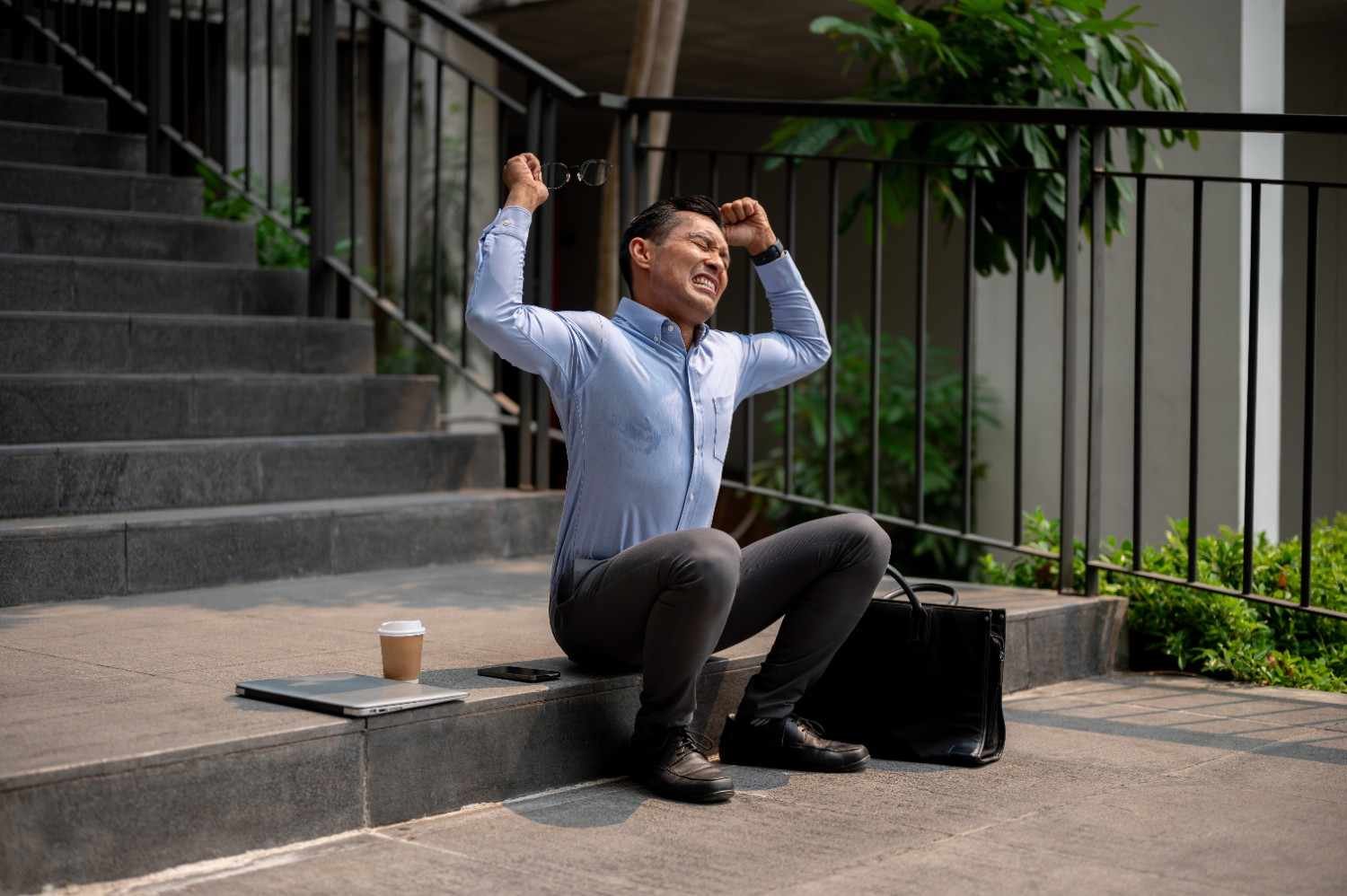
If I cannot clean the entire kitchen, I clean one section. If an hour of studying feels impossible, I read one page. If exercise sounds exhausting, I take a ten-minute walk.
These actions may seem insignificant, but their purpose is not immediate transformation. Their purpose is movement.
Once I begin, continuing often becomes easier.
Small achievable goals also reduce all-or-nothing thinking. I no longer have to choose between performing perfectly and doing nothing.
How Do I Focus on What I Can Control?
When problems pile up, I mentally separate them into things I can influence and things I cannot.
I cannot control another person’s reaction, an employer’s decision, economic uncertainty, or every unexpected expense. I can control the email I send, the conversation I initiate, the budget I review, the task I complete, and the support I seek.
I often ask myself, “What can I change today?”
That question reduces mental clutter and keeps me from spending all my energy worrying about situations that require time rather than immediate action.
Why Should I Shrink My Time Horizon During Stress?
Thinking six months ahead can become overwhelming when today already feels difficult. During those periods, I shorten my timeline. I have found that regaining focus after losing motivation becomes easier when I stop asking how I will fix everything this year and instead ask what I can reasonably accomplish during the next hour. If that still feels overwhelming, I focus on the next 15 minutes.
This approach makes staying focused during stressful times much easier because my brain only needs to deal with the immediate next step. A difficult season becomes less intimidating when I stop trying to mentally live through all of it at once.
Should I Change My Goals When Life Gets Difficult?
Yes. I believe adapting a goal is often more resilient than abandoning it.
If my usual routine becomes unrealistic, I reduce the requirement while preserving the direction.
Maybe five workouts become two. Two hours of studying becomes 30 minutes. A major household project becomes one small task each evening.
Adjusting expectations protects momentum.
This principle has become especially important for me when dealing with setbacks. Temporary circumstances should not force me into permanent decisions.
Is Discipline More Reliable Than Motivation?

Motivation depends heavily on emotion. Discipline and routines reduce that dependency.
When I already know when and where I will perform an important task, I spend less energy negotiating with myself.
I prepare what I need in advance, remove obvious distractions, and make good decisions easier to repeat.
This does not mean I force myself through exhaustion. Discipline during difficult periods should be flexible.
The goal is structure, not punishment.
Understanding how to stay motivated during personal challenges becomes much easier once I stop expecting motivation to appear before every important action.
How Can I Protect My Energy During Personal Challenges?
Motivation is affected by physical condition as much as mindset.
When possible, I protect a basic foundation of consistent sleep, regular meals, hydration, and movement. Even a short walk can provide a mental break from hours spent sitting, worrying, or staring at a screen.
I also schedule downtime before I completely run out of energy.
There is an important difference between intentional rest and avoidance. Rest helps me recover so I can return. Avoidance usually leaves the responsibility untouched while increasing anxiety about it.
Recovery is therefore part of staying productive, not the opposite of productivity.
How Can Support Help Me Stay Resilient?
I do not believe resilience means handling every problem alone.
During particularly difficult periods, I rely on a small circle of people whose judgment I trust. That might include family members, close friends, mentors, coworkers, or qualified professionals.
Sometimes I need practical help. Sometimes I need perspective. Occasionally I just need someone who can remind me that one difficult week does not determine the rest of my life.
A reliable support system can make overcoming personal challenges less isolating and help me see options I may overlook when stressed.
What Should I Do After a Major Setback?
Failure can make previous progress feel pointless, but I try to treat setbacks as information rather than verdicts.
I ask what happened, what I can learn, and what needs to change.
Perhaps the original goal was unrealistic. Maybe the strategy was wrong. Perhaps circumstances changed.
Adapting does not erase progress.
When rebuilding motivation after failure, I return to the smallest action that proves I am still participating in my own progress.
What Should I Do When I Have No Motivation at All?

On my worst days, I use what I think of as a minimum-progress rule.
A normal day gets my normal routine. A difficult day gets a reduced version. An extremely difficult day gets the smallest useful action that keeps the habit alive.
This protects consistency without pretending every day should look identical.
For anyone wondering how to stay motivated during personal challenges, I think this is one of the most important shifts: stop measuring success only by how much you accomplished and start noticing whether you continued moving in the right direction.
Frequently Asked Questions (FAQs)
1. How can I motivate myself when life feels overwhelming?
I reduce the time horizon and identify one controllable action. Instead of solving every problem simultaneously, I concentrate on something useful I can complete during the next 15 minutes or hour.
2. How do I stay motivated after failure?
I separate the outcome from my identity, identify what the setback taught me, adjust the strategy, and restart with a smaller goal.
3. Is discipline better than motivation during hard times?
Discipline and routines are generally more dependable because they reduce the need to feel inspired before taking action. However, routines should remain flexible when stress or exhaustion reduces your capacity.
4. Can taking breaks improve motivation?
Yes. Deliberate recovery can restore concentration and energy. The key is treating a break as recovery rather than allowing it to become indefinite avoidance.
5. Why do small wins increase motivation?
Small wins provide visible evidence of progress. They can reduce overwhelm, strengthen confidence, and make the next action feel easier to begin.
Moving Forward One Action at a Time
I no longer expect myself to feel inspired throughout every difficult period.
Instead, I focus on momentum.
I acknowledge what I am feeling without automatically letting that feeling decide what I do next. I reduce unnecessary cognitive load, shorten my timeline, adjust my goals, protect my physical energy, and ask for support when I need it.
Some days progress may mean completing an ambitious project. Other days it may mean taking a walk, answering one important email, or simply preserving a routine.
Both count.
Personal challenges can slow progress, but they do not have to end it. When I concentrate on the next manageable action instead of the entire road ahead, moving forward becomes possible again.